Getting the Lead Out.

Beaver Dam is carrying out a multi-year effort to replace lead and galvanized water service lines, which can be a source of lead in drinking water.

Learn about why the work matters, how the program will unfold, and what to do if you receive a notice.

Replacing lead service lines helps remove a potential source of lead in drinking water.

Understand service lines

Learn what a service line is and why lead or galvanized materials may need attention.

Explore >

Have you been contacted?

Understand why the Utility may contact you and what you need to do.

Start Here >

Questions & resources

Explore common questions, helpful resources, and who to contact for more information.

View FAQs >

>>> ABOUT GETTING THE LEAD OUT

Why Beaver Dam is addressing lead service lines

The Water Utility is replacing affected service lines in phases over several years, with the goal of completing the work by 2035. Different areas will be addressed at different times.

WHY IT MATTERS

Why replace these pipes?

Lead can enter drinking water from lead pipes and older plumbing. Replacing affected service lines removes one potential source of lead.

WHAT IS INCLUDED

Why include galvanized pipes?

Some galvanized pipes may have absorbed lead from lead pipes previously connected to them. These pipes can also contribute lead to drinking water.

HOW IT WORKS

Will my line need replacement?

The Utility may need to check your pipe’s material before deciding what work is needed. Not every line checked will need replacement.

~0

Affected service lines remaining

Approximately 1,100 affected service lines will need to be addressed in Beaver Dam. The Utility is checking pipe materials at some properties to determine what work is needed.

If your property is affected, Beaver Dam Water Utility will guide you through the process and explain what, if anything, you need to do. This website provides general information and does not replace property-specific notices.

>>> LEAD & SERVICE LINES

The pipe that connects your property to the water main

A water service line carries drinking water from the public water main to a home or building. The type of material used in that line matters.

Why replacing lead service lines matters

Some water service lines contain lead. Replacing lead service lines removes a possible source of lead in drinking water.

Exposure to lead has been linked to harmful health effects, particularly in infants, young children, and pregnant women. Young children are especially vulnerable because their brains and nervous systems are still developing.

Public and private portions

Your water service line: one connection, two portions.
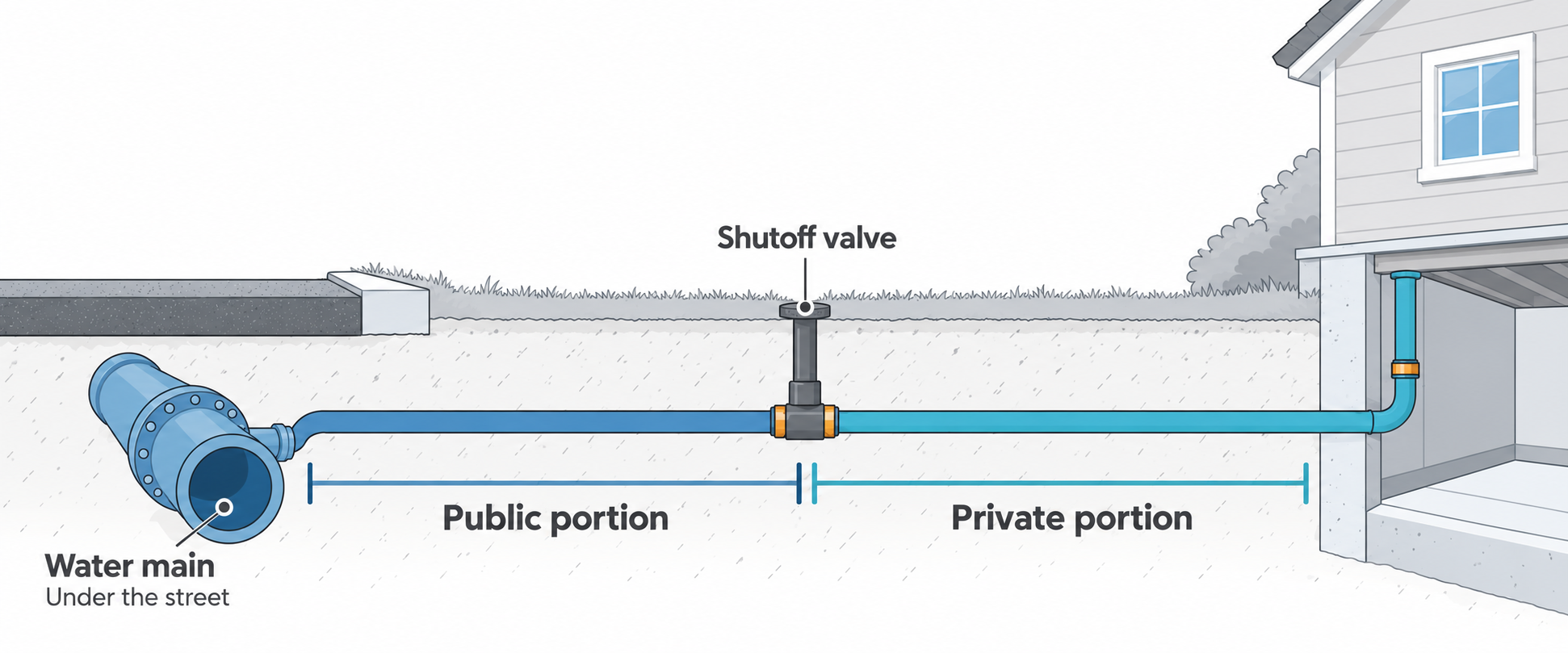
Illustration: the two portions of your water service line.

The water service line has two portions. The public portion connects the water main under the street to the shutoff valve near the street. The private portion connects that valve to your home or building.

If your service line needs to be replaced, the Water Utility covers the cost of replacing the public portion, and the property owner is responsible for the cost of replacing the private portion.

Why we may need to check your pipe

Beaver Dam has service-line records, but the Utility may need to confirm the material at some properties before deciding whether replacement is necessary.

Not every service line that is checked will need replacement.

What happens during a service-line check?

  • Utility staff check the pipe near your water meter, usually in the basement or crawl space.
  • City employees arrive in a City-identified vehicle. The visit generally takes less than 15 minutes.
  • Staff may also need to check the pipe outside your home.

To look up the recorded material for your service line, visit the City’s Water Line Inventory. (Please note: the Water Line Inventory is updated twice a year.) Contact the Water Utility if you need help understanding the information or believe your line has already been replaced.

Example of a lead service line
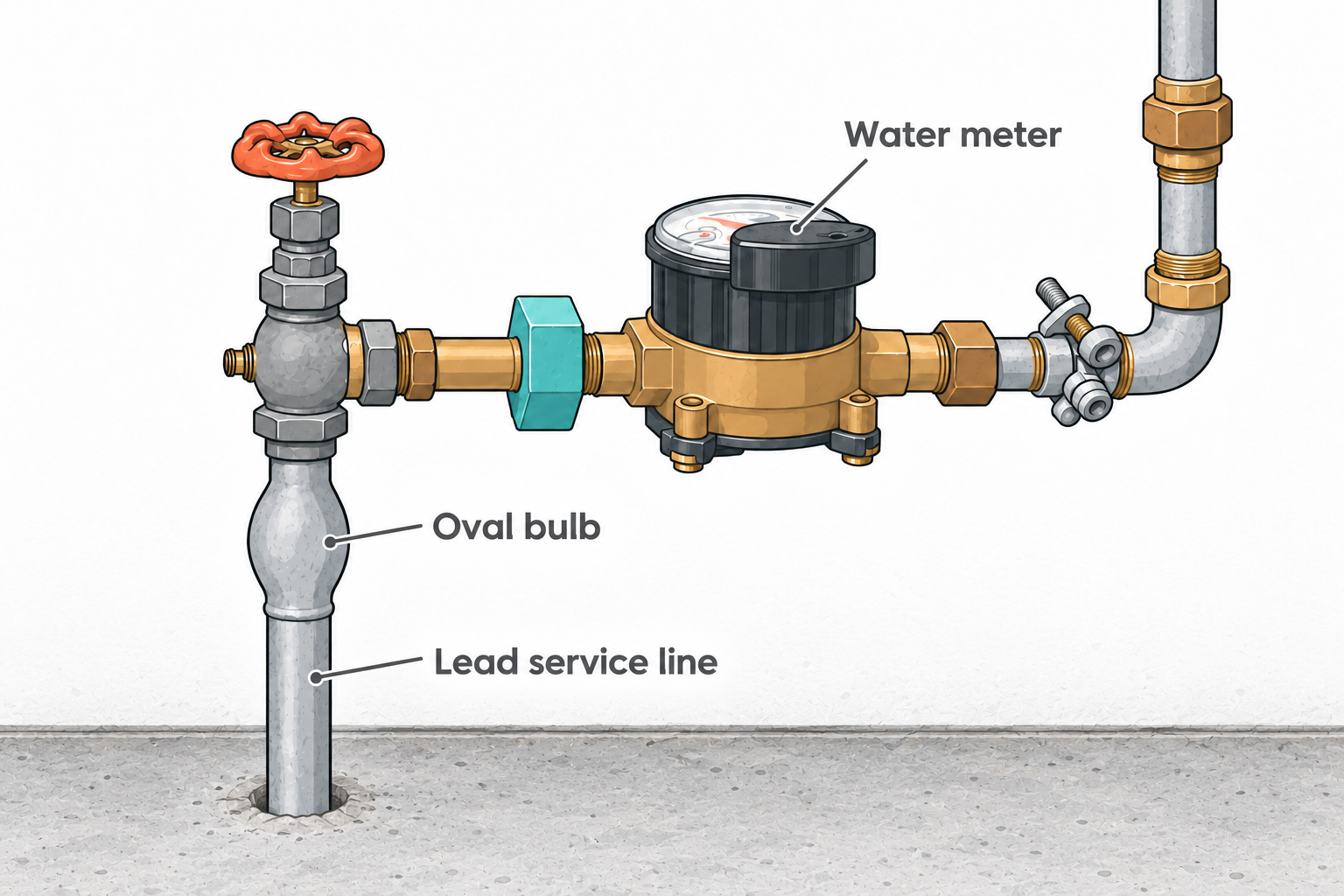
Illustration: example of a lead service line connected to a water meter. The oval bulb can be a clue that the pipe is lead.

If your service line contains lead or galvanized pipes that need replacement
Until your line is replaced, follow the Water Utility’s guidance to reduce potential lead exposure. Use cold tap water for drinking, cooking, and preparing baby formula. Boiling water does not remove lead. If you use a filter, choose one certified to reduce lead and follow its replacement instructions. These precautions are especially important for households with young children or pregnant or nursing women.

If your service line does not need replacement, the program’s replacement steps do not apply to your property.
NOTE: Older plumbing inside a home can also be a source of lead; contact the Water Utility if you have questions.

Find more information in Wisconsin DNR’s lead-in-drinking-water guidance.

>>> HAVE YOU BEEN CONTACTED?

Start with the notice you received

You may hear from Beaver Dam Water Utility or a project partner about checking your service line, planned replacement work, or another step involving your property.

Follow the specific instructions in your notice.

Your notice explains what applies to your property and whether you need to respond. Follow its instructions and respond by the date shown.

STEP 1

Read your notice

Check whether it asks you to schedule a visit, return a form, or prepare for upcoming work.

STEP 2

Respond by the date shown

Follow the instructions in your notice. Schedule a service-line check online, available 24 hours a day, or call 920-887-4624. Verification hours are Monday–Friday, 7 a.m.–6 p.m.

STEP 3

Prepare for replacement

If your line needs replacement, you’ll receive information about the work, estimated costs, any forms to return, and how to prepare.

Costs & payment
The Water Utility covers replacement of the public portion of the water service line. Property owners are responsible for the private portion. Costs vary with the work needed at each property.

For work completed through a City project, you’ll receive an estimated cost before construction. After the work is complete, you’ll receive a final assessment with the final amount you owe, along with payment instructions. Options include paying in full or in annual installments for up to 10 years, with interest.

If you rent your home
Your landlord or property owner is responsible for arranging replacement and paying for the private portion of the service line.

As a renter, you may be asked to provide access to your home or prepare for a temporary water interruption. If you receive a notice, share it with your landlord. Contact the Water Utility if you have questions about what you need to do.

>>> FAQS & RESOURCES

Answers to common questions

Learn more about checking your service line, replacement, and what to expect.

Some water service lines contain lead, which can enter drinking water. Replacing these lines removes a possible source of lead exposure.

Lead exposure has been linked to harmful health effects, particularly in infants, young children, and pregnant women. Young children are especially vulnerable because their brains and nervous systems are still developing.

The federal government is also requiring water utilities across the country to replace lead and certain galvanized service lines, generally within 10 years. Beaver Dam’s goal is to complete this work by 2035.

To look up the recorded material for your service line, view the City’s Water Line Inventory. (This document is updated twice a year.) The Utility may still need to check the pipe’s material at some properties. If you believe your line has already been replaced or the information is incorrect, contact the Water Utility.
Existing records may not be enough to determine the service-line material or what work is needed. Verification could include an inspection inside your home or building and, in some cases, work near the property. Not every line that needs verification will need replacement.
No. The visit helps the Utility confirm the pipe’s material and determine what work, if any, is needed. Staff may also need to check the line outside your home.
Your property may be part of upcoming work or the Utility may need information, access, or another response. Read your communication for the specific reason and any action required.
You do not need to schedule a program inspection unless the Water Utility asks you to. Contact the Utility if you have questions about your service line.
If the Utility has asked you to schedule a service-line check, you can schedule online. Online scheduling is available 24 hours a day. Verification hours are Monday–Friday, 7 a.m.–6 p.m. You can also call 920-887-4624 to arrange an appointment. Follow any property-specific instructions in your notice.
You’ll receive information about the required work, your responsibilities, estimated costs, and any forms you need to return. Scheduling and preparation details will follow as the project moves forward.
Beaver Dam is carrying out a multi-year program, with the aim of completing the work by 2035. Project planning considers service-line needs and coordination with street and other utility work. The Utility will share more specific timing as plans for each area are determined.
Your landlord or property owner is responsible for arranging replacement and paying for the private portion of the service line. As a renter, you may be asked to provide access to your home or prepare for a temporary water interruption. If you receive a notice, share it with your landlord. Contact the Water Utility if you have questions about what you need to do.
A sanitary sewer lateral carries wastewater from your home or building to the public sewer main. Some properties also need this pipe replaced as part of the project. Your notice will explain whether that work applies to you.
Costs depend on the length and location of the lines and the work required. Some properties may also need sewer-lateral work, relocation of existing lines, or other related improvements. Your estimate will identify the work associated with your property.
No. It is the estimated amount you may be charged for the work. Final costs are determined after construction, and you’ll receive a final assessment with payment information.
Contact the Water Utility early to discuss the payment options for your project. For City-project work, assessed costs can be paid in full or in annual installments for up to 10 years, with interest.
Call Beaver Dam Water Utility at 920-887-4624, Monday–Friday, 7 a.m.–3 p.m. If your notice names a specific project contact, use that contact for questions about the work described.

Helpful Resources

Beaver Dam Water Line Inventory
Look up the recorded service line material for your property. (This document is updated twice a year.)

Wisconsin DNR: Drinking Water and Lead
Health information and ways to reduce exposure

Wisconsin DNR: Lead In Drinking Water (PDF)
Learn how lead can enter drinking water and ways to reduce exposure.

Wisconsin DNR: Lead & Copper Rule
Current state and federal requirements

U.S. EPA: Lead & Copper Rule Improvements
Federal replacement-rule information

The Water Utility will add program materials and more detailed replacement guidance as they become available.

>>> QUESTIONS ABOUT THE PROGRAM?

Contact Beaver Dam Water Utility

If you have questions about your property, an inspection request, or a notice you received, the Water Utility can help.

For property-specific matters, continue to follow the contact information and instructions in the communications you received.

BEAVER DAM WATER UTILITY

Questions about your property
Monday–Friday, 7 a.m.–3 p.m.

Verification hours
Monday–Friday, 7 a.m.–6 p.m.